"You cannot solve problems with the same mindset that created them."

Albert Einstein

Why we need Systems Thinking

  • Growing interdependence of human affairs
  • Increasing complexity in the world and in personal lives
  • Need for a  practical  tool and 'language'  for unraveling  complexity 
  • Interdependence of global and local problems and challenges
  • Critical need for change in governance and leadership theories and practice.

Test your Systems Thinking

  • Do you tend to “jump into solutions” without understanding underlying causes of problems?
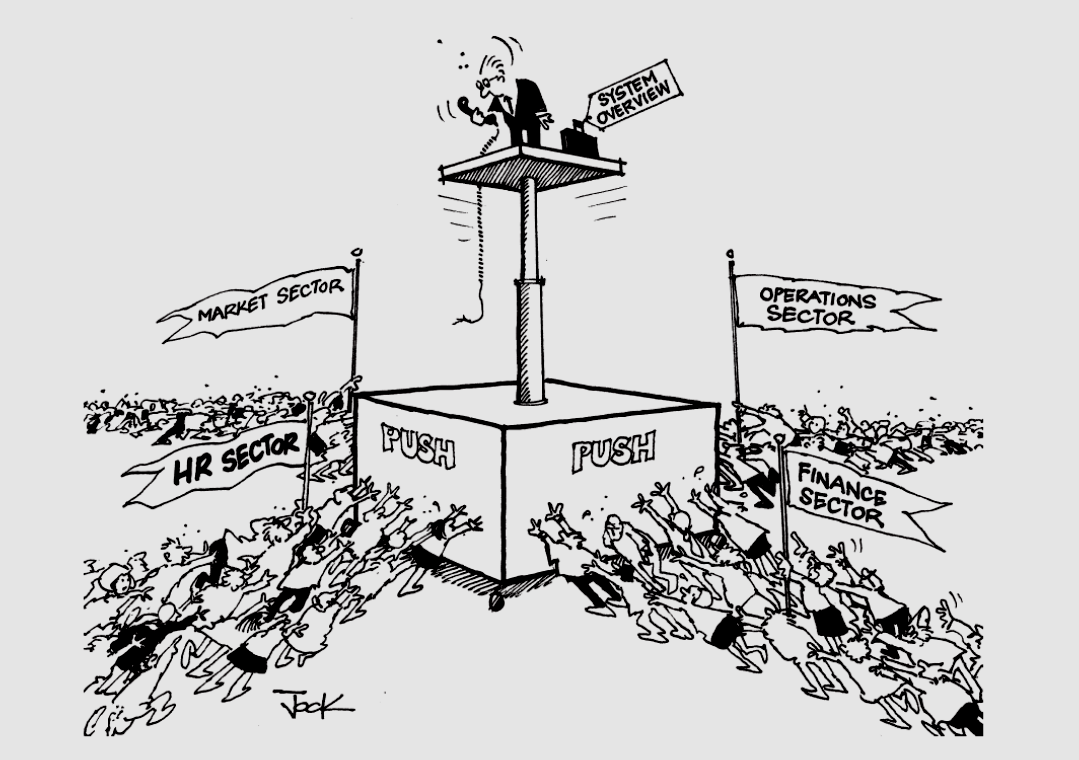
  • Do you work in a “silo” organisation (us and them), where decisions are made within isolated departments?
  • Do you work under unclear and shifting mandates and priorities from the top?
  • Does your daily work prevent you from improvement thinking and innovations?
  • Does your job feel like a “treadmill” – working hard but no meaningful long-term progress?
  • Are genuine communication and collaboration absent amongst your organization’s teams or departments?
  • Do you feel unsafe to speak your mind in meetings with superiors and colleagues?
  • Does your workload prevent you from deeply engaging with your customers and stakeholders to understand their needs and concerns?
  • Are you working hard and still feeling behind?
  • Do time pressure and burnout go unnoticed and unacknowledged in your organisation?

    If you answered “Yes” to any of the above, you and your organisation need Systems Thinking.
SYSTEMS THINKING

The systems approach begins when first you see the world through the eyes of another --  C.  West Churchman 

Despite our most impressive advances in sciences and technology, our prevailing worldview and the way we work and interact are deeply influenced by the thinking that originated in the 17th century. For over three centuries we have subscribed to ways of thinking based on the ‘divide and conquer’. This approach has served us well — It has made efficient mass production of goods and services possible, which has brought a new social and economic order, with unprecedented wealth and high standard of living in the industrialized world. 

Now, in the 21st century, this ‘mechanistic’ way of thinking has shown its age as futurist Alvin Toffler declared ‘the Age of the Machine is screeching to a halt’. The signs of division and fracture are increasing daily — in all aspects of human life —begging for fresh approaches to stubborn and chronic problems.

The accelerated interconnectedness and interdependence of human affairs in economy, trade and governance call for an urgent systemic (holistic) view of the global community, the environment and nationhood. In society and institutions, alike, fragmentation and disunity have resulted in complexity, conflict and untold waste and harm.

​Systems thinking offers a new way of thinking based on the primacy of the ‘whole’ and of relationships. It deals with hidden complexity, ambiguity and mental models. It provides scientific tools and techniques to unravel complexity and to create lasting interventions for chronic problems. System Thinking is the ability to see things whole — and the interconnectedness within the whole. It combines the art of seeing relationships and the science of explaining complexity. A central principle of systems thinking is that a whole is the interaction of its parts -- Not the sum of the individual parts.
kambiz@maani.co.nz

Web Design by SBWD